EN·VI·KO·JA Contact
Services / AI Data Biz / Robotics & physical AI
[ AI Data Biz · Robotics & physical AI ]

Robot skills,turned into data.

From egocentric video and teleoperation to 6DoF, VLA and simulation,
we capture, label and deliver in your training format.

Overview

Physical-AI data in four numbers

Who needs the data, how capture and labeling meet, which streams share one clock and which formats come out.

01 · Who needs it
robot families
Manipulation arms
grasps · 6DoF poses · teleop episodes · success labels
kitting in Hải Phòng · bin picking in Ulsan
Mobile robots
instructions · routes · obstacles · warehouse VLA
aisles in Bình Dương · Incheon · Rotterdam
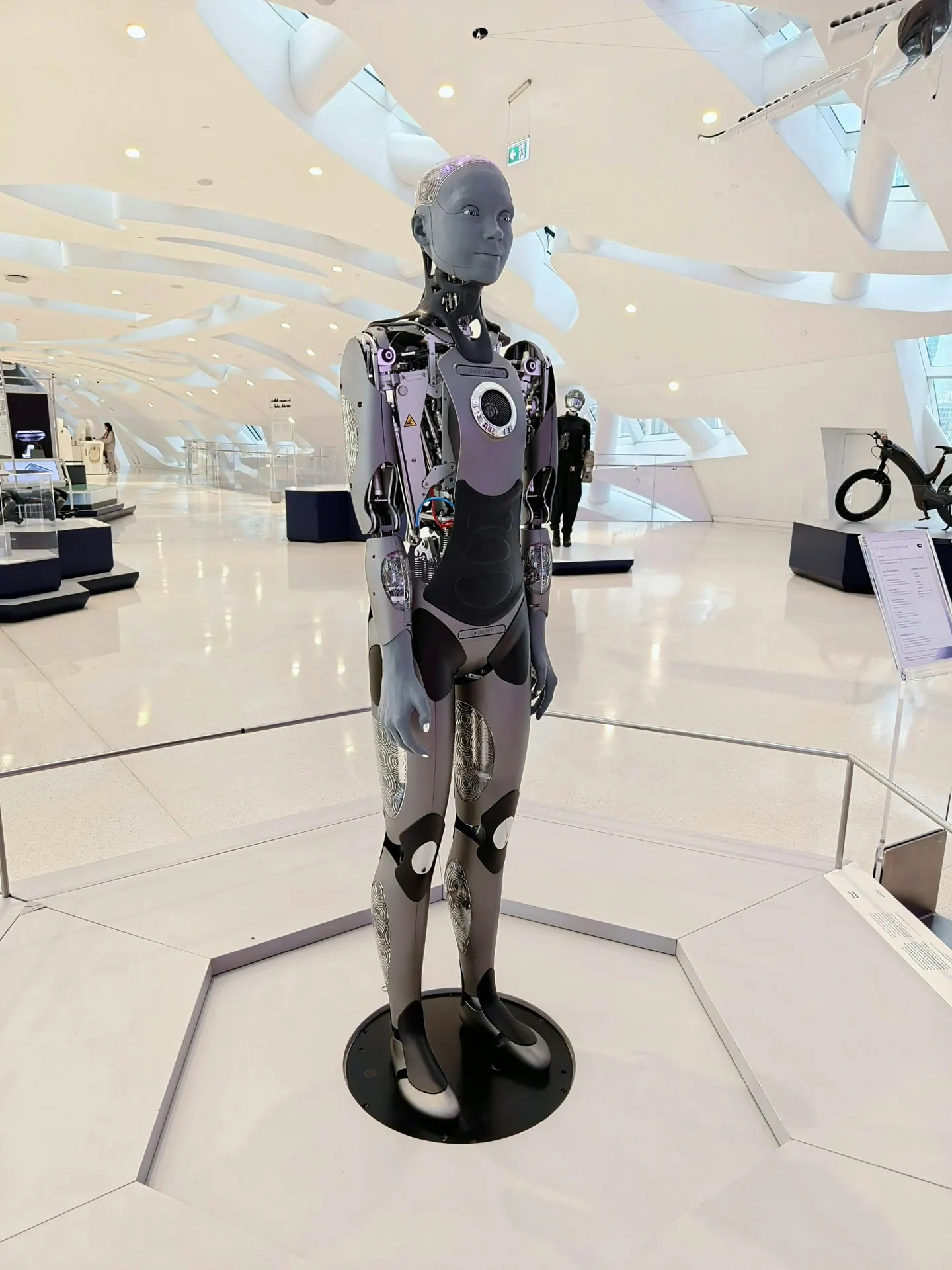
Humanoids
egocentric human video · whole-body teleop · hand pose
kitchens in Hà Nội · Seoul · Osaka
Manipulation arms, mobile robots and humanoids — each needs different labels.
02 · Capture meets labeling
capture rules
Rig
head cam or glasses, wrist cams, leader arms, VR controllers
Consent
signed per person and site before the first take; withdrawal honoured
Privacy blur
faces, screens and documents blurred before labeling
One episode ID
the capture log and every label share it
Rig, consent, blur and one episode ID keep capture and labels together.
03 · Sensor sync
streams on one clock
Cameras30 fps
RGB · depth, 3–4 views
Joint states50–500 Hz
position · velocity · effort
Gripper50 Hz
width · current
IMU200 Hz
head and wrist motion
Force / torque≈ 1 kHz
Fx Fy Fz Tx Ty Tz
One clock (PTP or a hardware trigger); streams resampled to the control rate.
04 · Formats
delivery formats
RLDSOpen X-Embodiment
TFDS episodes of steps: observation, action, reward, language
LeRobot datasetHugging Face LeRobot
Parquet frames + MP4 video, meta/info.json
MCAP · ROS 2 bagROS 2
raw topics with timestamps
HDF5ALOHA
one file per episode: qpos, action, images
Taken in and delivered in the schema your training code reads.
01 / 08 · Egocentric video

Egocentric video

First-person video from a head-mounted camera or glasses: hands, tools and objects as the worker sees them.

FRAME
00:11.80gaze
Head-cam frame · gaze point
HAND
00:12.40hands · chop starts
chop · vegetable · 12.40 →
Right and left hand boxes
OBJ
00:13.00active object
Active object · cleaver
NARR
00:13.60narration #C
Narration “C chops the vegetables” · 00:12.40
VERB
00:16.20verb–noun
Verb–noun · chop · vegetable
EXPORT · actions.csv
video_idP07_104
start00:00:12.40
stop00:00:19.82
verbchop
nounvegetable
narration#C C chops vegetables
faces_blurred0 / 0 ✓
00:19.82segment ends
One row per segment, ready for training
playhead
When teams use it

Pre-training manipulation and humanoid policies on human skill; hand–object and action models (Ego4D, EPIC-KITCHENS style).

Head cam · 30 fpsIMU · 200 HzTask scriptConsent form
What the labeler does

Consent first, then capture by task script. Faces, screens and documents are blurred; timestamped narrations (“C cuts the onion”), verb–noun action segments and hand / active-object boxes are added.

“Take” and “put” blur together when the hand barely moves. Each verb has a start rule — the frame the hand touches or lets go — in the guideline with video examples.

Delivered as · pass line

MP4 + CSV / JSON (start, stop, verb, noun, narration)

P07_104, 00:00:12.40, 00:00:19.82, chop, vegetable
Verb–noun accuracy ≥ 95 %Boundary ≤ 0.5 s · Faces blurred 100 %
02 / 08 · Teleoperation demos

Teleoperation demos

An operator drives the robot through a leader arm, VR controllers or a space mouse; every step records images, joint states and the action sent.

When teams use it

Imitation learning for manipulation and humanoids — ALOHA-style bimanual tasks, DROID-style varied scenes, policies such as ACT and diffusion policy.

What the operator does

Trained operators follow a task card and reset the scene between episodes; streams stay in sync at 50 Hz, and each episode is marked kept, failed or discarded with a reason.

Delivered as

LeRobot dataset (Parquet + MP4) · RLDS · HDF5 · MCAP

/observations/qpos [T, 14] · /action [T, 14] · /observations/images/cam_high
Watch for

Hesitation and re-grasps make the demonstrations noisy. Operators practise on a warm-up set; long pauses are flagged by joint-velocity checks and reviewed.

INC-TEL-0058 · teleop bay, Incheon
/leader/joint_states50 Hz
12.340 q[0:6] -0.25 -0.21 -0.45 +0.11
12.360 q[0:6] -0.68 -0.13 -0.28 -0.68
12.380 q[0:6] +0.08 +0.39 -0.04 -0.89
12.400 q[0:6] +0.82 -0.16 -0.07 +0.79
12.420 q[0:6] +0.35 -0.69 -0.49 -0.29
12.440 q[0:6] +0.91 -0.09 -0.69 -0.14
12.460 q[0:6] +0.38 -0.58 -0.19 -0.69
12.480 q[0:6] -0.30 +0.43 +0.82 +0.49
12.500 q[0:6] +0.90 +0.85 -0.92 +0.37
12.520 q[0:6] -0.36 -0.33 -0.08 -0.91
12.540 q[0:6] +0.39 -0.73 -0.33 -0.02
12.560 q[0:6] -0.26 -0.82 +0.33 -0.90
12.580 q[0:6] -0.08 -0.24 +0.85 -0.42
12.600 q[0:6] +0.79 -0.84 +0.21 -0.47
leaderleader joints → action[14]
/follower/joint_states50 Hz
12.340 q[7:13] -0.25 -0.21 -0.45 +0.11
12.360 q[7:13] -0.68 -0.13 -0.28 -0.68
12.380 q[7:13] +0.08 +0.39 -0.04 -0.89
12.400 q[7:13] +0.82 -0.16 -0.07 +0.79
12.420 q[7:13] +0.35 -0.69 -0.49 -0.29
12.440 q[7:13] +0.91 -0.09 -0.69 -0.14
12.460 q[7:13] +0.38 -0.58 -0.19 -0.69
12.480 q[7:13] -0.30 +0.43 +0.82 +0.49
12.500 q[7:13] +0.90 +0.85 -0.92 +0.37
12.520 q[7:13] -0.36 -0.33 -0.08 -0.91
12.540 q[7:13] +0.39 -0.73 -0.33 -0.02
12.560 q[7:13] -0.26 -0.82 +0.33 -0.90
12.580 q[7:13] -0.08 -0.24 +0.85 -0.42
12.600 q[7:13] +0.79 -0.84 +0.21 -0.47
followerfollower joints → observation.state[14]
/cam_high/image30 fps
12.340 frame 0412 640x480 jpg
12.373 frame 0413 640x480 jpg
12.407 frame 0414 640x480 jpg
12.440 frame 0415 640x480 jpg
12.473 frame 0416 640x480 jpg
12.506 frame 0417 640x480 jpg
12.540 frame 0418 640x480 jpg
12.573 frame 0419 640x480 jpg
12.606 frame 0420 640x480 jpg
12.640 frame 0421 640x480 jpg
12.673 frame 0422 640x480 jpg
12.706 frame 0423 640x480 jpg
12.740 frame 0424 640x480 jpg
12.773 frame 0425 640x480 jpg
cam_highcamera → observation.images.cam_high
/gripper/state50 Hz
12.340 w 0.0520 m · 0.52 A
12.360 w 0.0499 m · 0.53 A
12.380 w 0.0478 m · 0.61 A
12.400 w 0.0457 m · 0.53 A
12.420 w 0.0436 m · 0.45 A
12.440 w 0.0415 m · 0.54 A
12.460 w 0.0394 m · 0.46 A
12.480 w 0.0373 m · 0.61 A
12.500 w 0.0352 m · 0.68 A
12.520 w 0.0331 m · 0.50 A
12.540 w 0.0310 m · 0.44 A
12.560 w 0.0289 m · 0.43 A
12.580 w 0.0268 m · 0.51 A
12.600 w 0.0247 m · 0.42 A
grippergripper width and current
/sync/check1 Hz
12.340 cam_high Δ 2.0 ms ✓
12.360 cam_high Δ 2.2 ms ✓
12.380 cam_high Δ 2.6 ms ✓
12.400 cam_high Δ 2.6 ms ✓
12.420 cam_high Δ 1.9 ms ✓
12.440 cam_high Δ 1.6 ms ✓
12.460 cam_high Δ 2.4 ms ✓
12.480 cam_high Δ 4.0 ms ✓
12.500 cam_high Δ 1.2 ms ✓
12.520 cam_high Δ 2.6 ms ✓
12.540 cam_high Δ 2.2 ms ✓
12.560 cam_high Δ 3.2 ms ✓
12.580 cam_high Δ 4.1 ms ✓
12.600 cam_high Δ 3.0 ms ✓
syncclock skew per frame ≤ 5 ms
REC ep_005850 Hz · 920 steps · 18.4 sClock skew ≤ 5 ms ✓Dropped frames ≤ 0.1 % · Episodes reviewed 100 %
03 / 08 · Hand pose & grasp points

Hand pose & grasp points

21 hand keypoints (wrist and four per finger) or a MANO fit — and where and how an object is held: contact points, approach direction, gripper width.

NGY-HND-0007 · dexterous hand cell, Nagoya
K00wrist2.5 px ✓
K01thumb_cmc2.8 px ✓
K02thumb_mcp3.0 px ✓
K03thumb_ipv=0 · occluded, not guessed
K04thumb_tipv=0 · occluded, not guessed
K05index_mcp3.0 px ✓
K06index_pip3.3 px ✓
K07index_dip2.1 px ✓
K08index_tip3.5 px ✓
K09middle_mcp3.5 px ✓
K10middle_pip2.5 px ✓
K11middle_dip1.2 px ✓
K12middle_tip2.2 px ✓
K13ring_mcp1.6 px ✓
K14ring_pip3.3 px ✓
K15ring_dip2.6 px ✓
K16ring_tipswap check ✗ → fixed
K17little_mcp2.4 px ✓
K18little_pip2.9 px ✓
K19little_dip2.3 px ✓
K20little_tipswap check ✗ → fixed
21 keypoints per hand · 2D error per joint · occluded joints flagged

Retargeting human hands to dexterous robot hands; grasp-pose detection for bin picking (GraspNet-1Billion style).

Keypoints are placed in 2–4 synchronized views and triangulated; occluded joints are flagged, not guessed. Each grasp gets two contact points, an approach vector and a width, scored good or bad.

Delivered as COCO-WholeBody hand JSON · MANO (θ 45 + β 10) · 6-DoF grasp (R, t, width, score)"grasp": {"t": [0.412, -0.035, 0.118], "width": 0.046, "approach": [0, 0, -1]}

2D keypoint error ≤ 4 px · 3D joint error ≤ 10 mm · Grasp width ± 2 mm

04 / 08 · Action segmentation

Action segmentation

A task cut into steps with a start and an end frame each — reach, grasp, lift, move, place, release — so every frame carries a label.

HPH-PAK-0716 · Hải Phòng
Frame-wise confusion · gold (rows) vs labeler (columns), %
reach
pull
press
seal
label
bg
reach
95
3
0
0
0
2
pull
2
94
3
0
0
1
press
0
3
92
4
0
1
seal
0
0
5
93
1
1
label
0
0
0
2
96
2
bg
3
1
0
0
2
94
0.88F1@25 ≥ 0.85
87Edit score ≥ 85
± 3boundary, frames
When teams use it

Sub-task policies and skill libraries, progress estimation, finding where demonstrations fail.

What the labeler does

A step vocabulary is fixed per task; labelers scrub frame by frame and set boundaries at contact and release; idle frames get “background”.

Delivered as

Frame-wise label txt · JSON segments (start_frame, end_frame, step)

{"start": 312, "end": 401, "step": "place", "obj": "parcel"}
Long tasks drift into many tiny steps (over-segmentation).

A minimum step length and the edit score against gold catch fragmentation before delivery.

reach0–38
pull39–102
press103–171
seal172–260
label261–340
reach0–41
pull42–100
press101–170
seal171–214
seal222–262
label263–340
ep_0716 · 341 f
GOLDLABELER
red sliver = 7-frame fragment (over-segmentation) → caught by the minimum step length
05 / 08 · Object 6DoF pose

Object 6DoF pose

Each object’s 3D position and orientation in the camera frame — rotation R and translation t — found by aligning its CAD model.

The CAD mesh is aligned in two or three views and refined against depth; symmetric axes are declared; poses propagate through the sequence with known camera poses and are checked at keyframes.

RGB-D framesCAD meshesIntrinsics KCamera poses
When teams use it

Bin picking, assembly and insertion; pose estimators benchmarked BOP-style on YCB-like objects.

Sample"cam_t_m2c": [41.2, -12.8, 612.5], "obj_id": 7
kf_000
✓ reproj 2.1 pxpropagated from kf_000
kf_020
✓ reproj 1.9 pxpropagated from kf_000
kf_040
✓ reproj 2.4 pxpropagated from kf_000
kf_060
✓ reproj 2.6 pxpropagated from kf_000
kf_080
✓ reproj 2.2 pxpropagated from kf_000
kf_100
✓ reproj 2.0 pxpropagated from kf_000
kf_120
✗ reproj 3.8 pxre-aligned, then propagated again
kf_140
✓ reproj 2.3 pxpropagated from kf_000
H2fx=F2/G2
J2fx=IF(AND(H2<0.1, I2<=3), "PASS", "REWORK")
J8fx=IF(AND(H8<0.1, I8<=3), "PASS", "REWORK") → REWORK
A
B
C
D
E
F
G
H
I
J
1
keyframe
obj_id
t_x mm
t_y mm
t_z mm
ADD-S mm
d mm
ADD-S / d
reproj px
verdict
2
kf_000
7
41.2
-12.8
612.5
3.1
62.0
0.050
2.1
PASS
3
kf_020
7
43.0
-12.5
611.8
2.8
62.0
0.045
1.9
PASS
4
kf_040
7
44.9
-12.1
610.2
3.6
62.0
0.058
2.4
PASS
5
kf_060
7
46.6
-11.6
608.9
4.0
62.0
0.065
2.6
PASS
6
kf_080
7
48.1
-11.2
607.7
3.3
62.0
0.053
2.2
PASS
7
kf_100
7
50.0
-10.9
606.1
2.9
62.0
0.047
2.0
PASS
8
kf_120
7
52.4
-10.1
604.0
7.1
62.0
0.115
3.8
REWORK
9
kf_140
7
53.9
-9.8
603.2
3.4
62.0
0.055
2.3
PASS
Comments
Note · symmetry

Symmetric parts — caps, dials, cans — have many equally right rotations. Symmetries are declared per object and scored with ADD-S, so a label is not “wrong” by 180°.

posessymmetrybop_exportADD(-S) < 10 % of diameter · Reprojection ≤ 3 px · Keyframes checked 100 % · format BOP JSON (cam_R_m2c, cam_t_m2c, obj_id) · YCB-Video style
06 / 08 · Trajectory & success labels

Trajectory & success labels

The end-effector path through key waypoints, success or failure per episode and sub-goal, the failure reason and where a person took over.

KYO-TRJ-1207 · research lab, Kyoto
ep_1201✓ success9.8 s
ep_1202✓ success10.4 s
ep_1203✗ failuremissed_grasp
ep_1204✓ success11.0 s
ep_1205✗ failurecollision_shelf
ep_1206✓ success9.6 s
ep_1207✗ failureslip_after_lift · takeover
ep_1208✓ success10.1 s
ep_1209✗ failuretimeout_30s
ep_1210✓ success9.9 s
ep_1211✗ failuredrop_on_place
ep_1212✓ success10.7 s
When teams use it

Filtering demonstrations before training, reward models and success detectors, policy evaluation and fleet logs.

What the reviewer does

Reviewers mark waypoint frames (pre-grasp, grasp, lift, place), judge each sub-goal against the task card, pick the failure reason from a taxonomy and mark intervention start and end.

Delivered as

JSON per episode (waypoints, success, failure_reason, interventions) · RLDS reward / is_terminal

Success agreement κ ≥ 0.90Failure reason ≥ 95 % · Waypoint ± 5 frames

“Almost placed” is judged differently by every reviewer. Success is written as a measurable end state — object inside the zone, gripper open, still for 1 s — with photo examples.

07 / 08 · Vision–language–action (VLA)

Vision–language–action (VLA)

Camera images, a natural-language instruction and the robot actions as one sample — the shape RT-2, OpenVLA and Octo learn from.

bdg-vla · episode_2041bdg-vla · stats
⟵ ⟶ ⟳ai-studio / datasets / bdg-vla / episode_2041Bình Dương logistics cell
faces blurred · 4
language_instruction“pick the box off the conveyor and put it on the pallet”
▶step 412 / 920 · 10 Hzcam_highcam_wrist
"language_instruction": "pick the box off the conveyor and put it on the pallet"
README.mdDataset card

Use

Generalist robot policies that follow spoken or typed commands across tasks and robots (Open X-Embodiment style).

How it was made

One clear instruction per episode or segment, 3–5 paraphrases by native speakers in VI · KO · EN · JA, nouns grounded to boxes, and every instruction checked against what the robot actually did.

Schema

RLDS (language_instruction per step) · LeRobot task field · JSONL

Quality

Instruction ↔ action match ≥ 98 % · Paraphrases 3–5 / episode · Ambiguous ≤ 2 %

Rejected in review

“Put it there” — instructions lean on context the model never sees. Instructions must name the object and the place in the frame; “it” and “there” are rejected in review.

language_instruction · paraphrases by native speakers
VI“lấy thùng trên băng chuyền đặt lên pallet”✓
KO“컨베이어의 상자를 집어 팔레트에 올려”✓
EN“pick the box off the conveyor and put it on the pallet”✓
JA“コンベヤの箱をパレットに置いて”✓
KO“그거 저기 놔”✗ rejected · no object, no place
EN“move the box from the belt onto the pallet”✓
VI“chuyển thùng từ băng chuyền sang pallet”✓
JA“ベルトの箱をパレットへ移して”✓
KO“벨트 위 상자를 팔레트로 옮겨”✓
08 / 08 · Simulation & synthetic data

Simulation & synthetic data

Scenes built in Isaac Sim or MuJoCo with randomized light, texture, pose and physics; labels come out of the renderer and a real hold-out shows the gap.

#4100
900 lx · tex 04 · cam +0°auto labels from the renderer
#4137
220 lx · tex 17 · cam -3°auto labels from the renderer
#4174
1850 lx · tex 22 · cam +2°auto labels from the renderer
#4211
480 lx · tex 31 · cam +4°auto labels from the renderer
#4248
1320 lx · tex 09 · cam -2°auto labels from the renderer
#4285
150 lx · tex 40 · cam -5°auto labels from the renderer
#4322
760 lx · tex 46 · cam +1°auto labels from the renderer
#4359
2000 lx · tex 12 · cam +5°auto labels from the renderer
Figure 8 · sample

Same real hold-out, five data mixes. A mix ships only if it beats real-only data.

Rare and risky cases, early policy training, pose and segmentation pre-training before real data exists.

We check asset scale and physics, set randomization ranges, audit auto-labels on samples, label the real hold-out by hand and report results by sim : real mix.

Delivered as USD · MJCF scenes · BOP / COCO labels · LeRobot / RLDS episodes

"randomize": {"light_lux": [150, 2000], "textures": 48, "friction": [0.4, 1.0]}

Auto-label audit · mask IoU ≥ 0.95 · Real hold-out ≥ 500 frames · Mixes tested 3

Models learn the renderer, not the world (the sim-to-real gap).

How the work runs

Five steps, one batch

Guideline and rig first, a pilot in full review, then production with a QA gate on every batch.

  1. 1
    Task & guideline3–5 days

    Task cards, success end states, failure taxonomy, step vocabulary, consent and privacy rules agreed on your samples.

  2. 2
    Rig & sync check2–3 days

    Clocks, camera calibration and joint streams checked on a dry-run episode; a skew table and fixes before capture starts.

  3. 3
    Pilot1–2 weeks

    50 episodes or 5 hours of video captured and labeled, reviewed in full; gold scores, error report, guideline v1.1.

  4. 4
    ProductionBy batch

    Operators and labelers in shifts; model pre-labels corrected by people. AI Studio by default, your platform when needed.

  5. 5
    Quality inspectionEvery batch

    Second review, hidden gold episodes, AQL sampling inspection and each method’s measure — skew, F1@25, ADD-S, κ, instruction match.

    fail → rework, back to 04
What you receive at each stage
01Guideline · task cardsINFINIQ · AI Data Biz
v1.0
3–5 daysTask & guideline
02Sync reportINFINIQ · AI Data Biz
v1.1
2–3 daysRig & sync check
03Pilot reportINFINIQ · AI Data Biz
v1.2
1–2 weeksPilot
04Batches in your formatINFINIQ · AI Data Biz
v1.3
By batchProduction
05QA report · rework on failINFINIQ · AI Data Biz
QA ✓
Every batchQuality inspection

AI Studio by default, your platform when needed. Durations are a sample.

FAQ

Before the first episode

Can you collect the data, not only label it?

Yes. Teleoperation and egocentric capture run with consented operators in our studio or at your site, and we label the logs you already have.

Which robots and rigs do you work with?

Leader–follower arms, VR and space-mouse teleoperation, head and wrist cameras, mobile bases and humanoids — on your hardware or a rig we set up together.

Which formats do you take and deliver?

LeRobot dataset, RLDS, MCAP / ROS 2 bags and HDF5 in; the same or your own schema out, with the QA report.

How do you keep the streams in sync?

One clock (PTP or a hardware trigger), a sync check before capture and a skew table per batch; streams are resampled to the control rate.

What about faces and personal data?

Consent per person; faces, screens and documents are blurred before labeling and the work runs in a secure zone — under the law of every country the data touches: Vietnam (Law 91/2025/QH15, Decree 356/2025/NĐ-CP), Korea (PIPA), Japan (APPI), the EU (GDPR) and the US (CCPA and state laws).

Do you use synthetic data?

When it helps: we build or check Isaac Sim and MuJoCo scenes, audit the auto-labels and prove each mix on a real hold-out.

What is the smallest way to start?

A paid pilot of 50 episodes or 5 hours of video: guideline agreed, captured and labeled, reviewed in full, with gold scores and an error report.

Do you keep failed episodes?

Each episode is marked kept, failed or discarded with a reason. Failures carry a reason from a taxonomy, the sub-goal that failed and where a person took over, so they can serve filtering, reward models and evaluation.

Can you write VLA instructions in several languages?

Yes. One clear instruction per episode or segment, with 3–5 paraphrases by native speakers in Vietnamese, Korean, English and Japanese. Each is checked against what the robot did, and vague words like “it” or “there” are rejected.

How long until the first batch?

As a sample: 3–5 days for task cards and the guideline, 2–3 days for the rig and sync check and 1–2 weeks for the pilot; production then runs in shifts, batch by batch.

Tell us what you
need built.

A specialist replies within one business day — in English, Vietnamese, Japanese or Korean.

Book a consultationContact us
↑Back to top