A test team kept apart from development
Independence is technical, managerial and financial; the four menus show what we test.
- 01Web & mobile
- 02Embedded
- 03Mobility & robotics
- 04AI & LLM
- 05Localization
- QAQuality targets set per project
- QARequirement-based test design
- (INT)ISO 26262
- (INT)WCAG 2.2
A dedicated team, tests in your pipeline, real devices and local testers.
From a phone app to an LLM: five targets with their own test beds.
→02Test typesEight types, from functional to accessibility, each with a pass measure.
→03Quality & certificationV&V, compliance, lab preparation and test strategy.
→04Operating modelA dedicated team, tests in your pipeline, real devices and local testers.
→- Technicalour own test design, tools and environment
- Managerialresults reported to you, not through the developers
- Financialthe test budget is not cut when development runs late
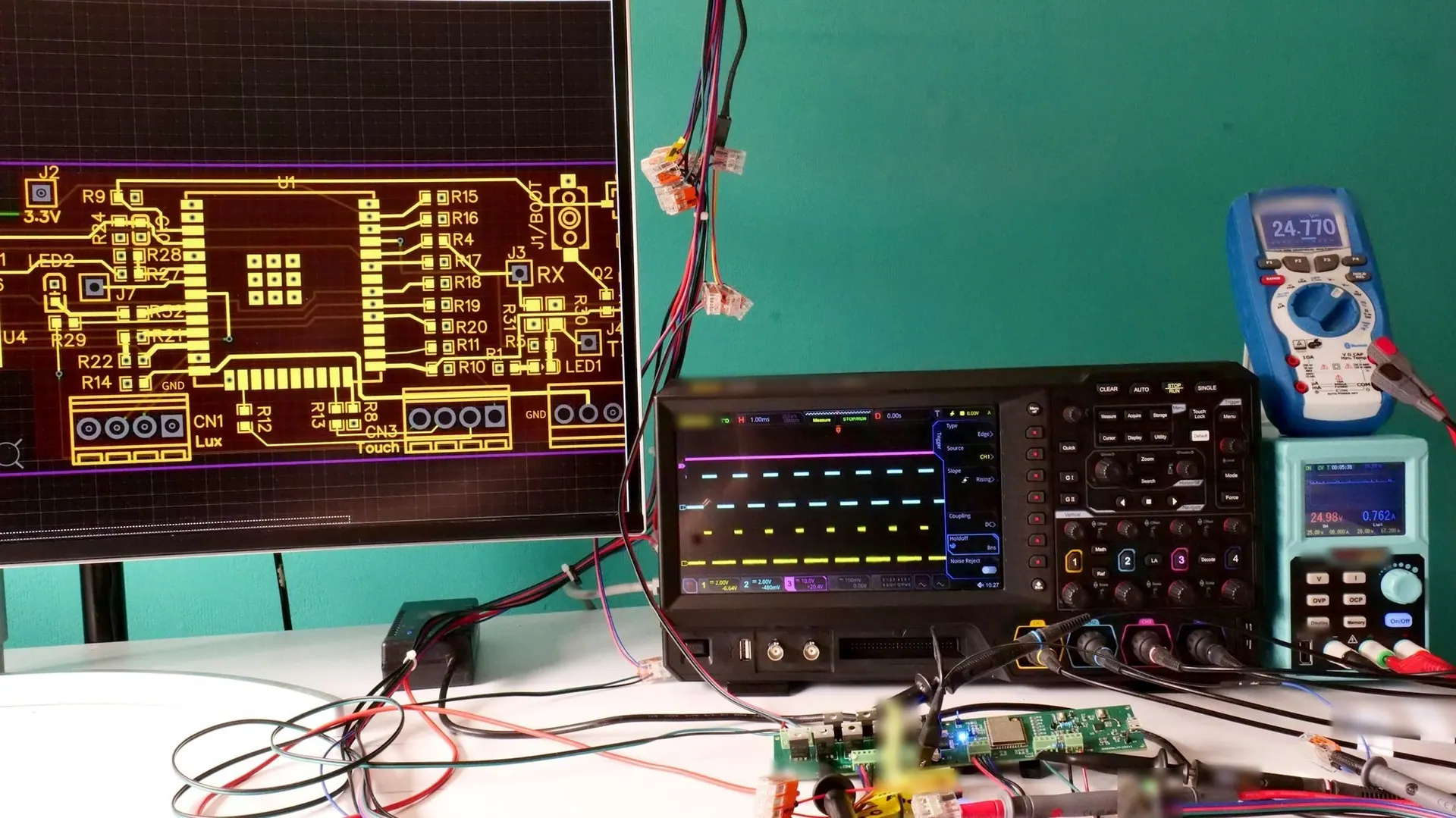
Five test targets, in the photo
Boxes drawn on real objects, each with its rule or measure.
- (EU)AI Act Art. 50 · AI label✓
- (US)NIST AI 600-1 · 12 risks✓
- (INT)OWASP LLM01 · injection✓
- (KR)AI Basic Act · notice✓
Crash and ANR rates decide store visibility.
Android vitals bad-behaviour thresholds: 1.09 % crashes, 0.47 % ANRs, 8 % on one model.
Every state and transition, then power loss in each state.
Door controller: 9 states, 23 transitions, power cut in each (example).
Scenario coverage counts, not kilometres driven.
4,200 cut-in variants with TTC 1.5 s as the safety line (example).
Several scores decide a release, not one accuracy number.
EU transparency duties apply from 2 Aug 2026; NIST lists 12 generative-AI risks.
Prices, dates and names follow the locale.
VND, KRW and JPY have no decimals; vi-VN writes 1.250.000 ₫; Japan may show 令和8年.
Test types to open one by one
Each row opens to show the method, a typical tool and one rule of thumb.
- 01FunctionalGherkin, Cucumber+
Given / When / Then cases written with the business owner.
- 02Test automationPlaywright, Appium+
Role-based locators and auto-waiting asserts keep suites stable.
- 03Performance & loadk6, JMeter+
Little's law sizes the test: users = throughput × (response + think).
- 04CompatibilityDevice lab + cloud farm+
Three tiers: full regression, smoke, cloud spot checks.
- 05Reliability & failureFault proxies, chaos tools+
Circuit breaker tested through closed, open and half-open.
- 06Security vulnerabilitySAST · SCA · DAST+
SBOM checked for known CVEs before each release.
- 07API & integrationPostman/Newman, Pact+
Object-level authorization: user A must not read user B's order.
- 08Usability & accessibilityaxe + screen readers+
Automated checks find about 57 % of issues; people find the rest.
When tap Pay
Then receipt shown
→ about 20 cases
test('pay with saved card', async ({ page }) => {
  await page.getByRole('button', { name: 'Pay' }).click();
  await expect(page.getByText('Paid')).toBeVisible();
});blast radius: one region (example)
High 7.0–8.9
Critical 9.0–10.0
retest ✓
Boundary values, decision tables, pairwise
Gherkin, Cucumber
4 × 5 × 3 = 60 combinations → about 20 cases
Role-based locators, sharded runs
Playwright (web), Appium (mobile)
--shard=n/4, trace saved on the first retry
Little's law for concurrent users
k6, JMeter
p(95) < 800 ms at peak load (example)
Three-tier device matrix, in-app browsers
Device lab + cloud farm
Models covering ~80 % of sessions, the latest three OS versions (example)
Chaos experiment: steady state → inject → limit blast radius
Fault proxies, chaos tools
99.9 % availability = 43.2 min error budget per 30 days
SBOM / CVE check per release, manual pen test, retest
SCA with CycloneDX or SPDX
(INT) CVSS v4.0: High 7.0–8.9, Critical 9.0–10.0
Authorization, idempotency, consumer contracts
Postman/Newman, Pact
(INT) OWASP API Top 10 2023 API1 · errors per (INT) RFC 9457
Keyboard and screen-reader runs, five-user sessions
axe + screen readers · (KR) KWCAG 2.2
(INT) WCAG 2.2 SC 2.5.8: targets at least 24 × 24 CSS px
Four steps from definition to certificate
Each quality service hands its output to the next one down.
- 01System V&V✓
- 02Compliance testing✓
- 03Test & certification link✓
- 04QA consulting & test strategy✓
- 01System V&V
Verification: specified requirements met. Validation: fit for the intended use.
Traceability matrix · sign-off - 02Compliance testing
Accessibility for EU and US launches: (INT) WCAG 2.2-based audits.
(EU) EAA applies since 28 Jun 2025 · (US) ADA Title II from 26 Apr 2027 - 03Test & certification link
You, INFINIQ QA, the accredited lab, then the certification body — in that order.
You choose the lab · its report goes to the certifier - 04QA consulting & test strategy
Assess the test process, then improve one area at a time.
(INT) TMMi 5 levels · (INT) TPI NEXT 16 key areas
Six metrics for quality
Sample trends over eight sprints, as they appear in the weekly report.
Running team, pipeline and devices
Front: how it works. Back: what to settle before you choose it.
A managed team: your requests go through our QA lead.
Who gives instructions matters under (KR) the Dispatched Workers Act and (JP) the Worker Dispatching Act.
Run only the tests the change touches, the full set at night.
Meta's predictive selection ran about a third of tests and still caught over 99.9 % of faulty changes.
Some flows only fail on real phones and real networks.
SMS OTP per carrier, eSIM, 3-D Secure; Vietnam 2G sites closing from 15 Sep 2026; Japan FOMA ended 31 Mar 2026.
Testing linked to three units
Where QA Biz work starts in another unit and where its results go.
Evaluation sets and native-speaker labels for LLM tests; failure logs come back as new data.
→Development BizDevelopers run automated tests on every build; QA Biz verifies independently.
→ODC · dedicated teamA long-term team for your product can include QA roles.
→Mobility & roboticsDrive logs → labels (AI Data Biz) → re-simulation → track test (QA Biz).
→Questions about QA Biz
Do you test to the same framework as the HQ Testing Service?
We follow the same verification framework: functional, performance, compatibility, stability and security, plus the other types.
How do you choose devices for a market?
From your analytics: models covering about 80 % of sessions, plus current and two older OS versions, checked against market share (example).
Can embedded projects run on our own bench?
Yes. We write the test scripts and fault list for your HIL bench, or work with the bench you ship to us.
Do you test robots and vehicles you do not build?
Yes. The vehicle, robot and track belong to you or your partner; we write the scenarios, run the simulations and test sheets, and report.
How is an LLM evaluation reported?
Scores per metric and per language, failing transcripts as evidence, and a rerun on the fixed model.
Which tools do you use for automation?
Usually Playwright for web, Appium for mobile and Postman/Newman for API, but we work in your stack if one exists.
Can you get our product certified?
Certification is issued by accredited bodies. We prepare the test items, run pre-tests, assemble evidence and handle findings with you.
Which metrics appear in the weekly report?
Requirement coverage, pass rate, open defects by severity, defect density, detection rate and repair time; you can pick the set.
Who directs the testers day to day?
In a managed team, our QA lead; you set priorities with the lead. In staff augmentation, your manager does.
How does QA Biz work with AI Data Biz?
AI Data Biz builds and labels evaluation sets; QA Biz runs the evaluation and returns failure cases as new data.
